Panasonic Lumix DMC-ZR3 Overview
by Greg Scoblete, Mike Tomkins and Stephanie Boozer
Review Date: 11/09/2010
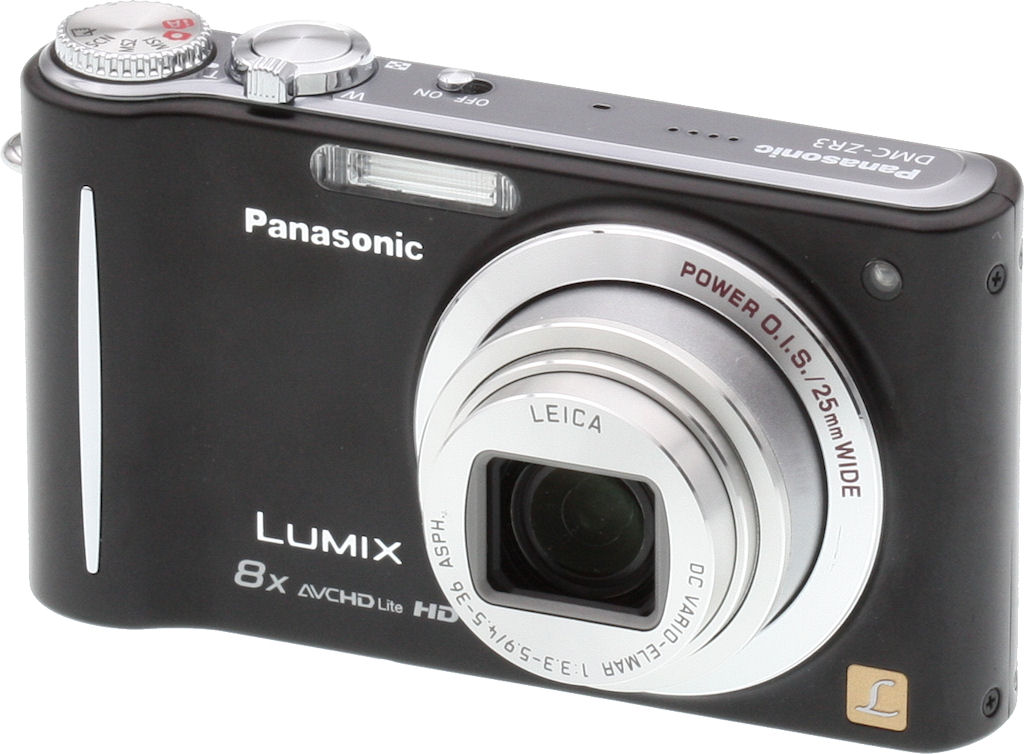
The Panasonic Lumix DMC-ZR3 has a slim inch-thick body, and offers an effective sensor resolution of fourteen megapixels from a 1/2.33-inch RGB CCD image sensor. Panasonic has coupled the ZR3's sensor to a Leica DC Vario-Elmar branded 8x optical zoom lens, which offers focal lengths spanning the range from a generous 25mm-equivalent wide angle to a useful 200mm telephoto. Importantly, the Panasonic ZR3's lens features a true optical image stabilization system, with which to fight blur caused by camera shake. The DMC-ZR3's POWER O.I.S. system is said to offer double the stabilizing power of the company's previous generation MEGA O.I.S. systems. The minimum focusing distance for the Panasonic DMC-ZR3 is just three centimeters at wide angle or 100 centimeters at telephoto, when the camera is switched to either the Macro or Intelligent Auto mode. The Panasonic ZR3 has a two-step aperture, which can select between F3.3 or F10.0 at wide angle, and F5.9 or F18.0 at telephoto. There's sadly no optical viewfinder, with the Panasonic ZR3 instead opting solely for a 2.7" LCD display with 230,000 dot resolution, on which images and videos are both framed and reviewed.
The Panasonic DMC-ZR3 has an 11-point multi-area autofocus system which also includes a single-point "high speed" focusing mode. As with many digital cameras these days, there's also a face detection function, with Panasonic's implementation able not only to locate faces and then use the information when calculating both focus and exposure variables, but also to recognize the faces of specific individuals for labelling and prioritizing purposes. The Panasonic Lumix ZR3 also has an implementation of autofocus tracking, which can monitor a subject as it moves around the frame, continuing to update autofocus as required. Unusually, the Lumix ZR3 has a Travel mode which allows the user to specify a destination as well as the travel dates, with the camera then automatically organizing photos by trip.
ISO sensitivity ordinarily ranges from 80 to 1,600, with the ability to extend this as far as ISO 6,400 equivalent in High Sensitivity Auto mode. Shutter speeds from 1/2,000 to 60 seconds are possible. The Panasonic DMC-ZR3 uses Intelligent Multiple metering, and offers six white balance settings including Auto, Manual, and four fixed presets. A whopping selection of twenty nine scene modes let users tailor the look of their images, useful given that the Panasonic ZR3 doesn't offer aperture-, shutter-priority, or fully manual modes. Among the scene mode choices is a High Dynamic mode which increases dynamic range and offers three settings - standard, art or black and white. There's also an Intelligent Scene Selection function, which can automatically select from a subset of six commonly used scene modes. A five mode flash strobe includes red-eye reduction capability, and has a rated range of up to 5.3 meters at wide angle, or 2.9 meters at telephoto. The Panasonic DMC-ZR3 also includes the company's Intelligent Exposure, Intelligent ISO, and Intelligent Auto functions as seen on past models.
As well as JPEG still images, the Panasonic ZR3 can capture 30 frames-per-second movies with monaural sound, at resolutions of 1280 x 720 pixels or below, using either AVCHD Lite or QuickTime Motion JPEG compression. (AVCHD Lite 720p format is 60p from 30p sensor output.) A new Video Divide function allows in-camera movie splitting, letting users trim away the unwanted portions to keep just the parts of movies that they desire.
Unlike many cameras, the Panasonic ZR3 does allow use of its optical zoom lens during movie recording. The Panasonic Lumix DMC-ZR3 stores its images and movies on Secure Digital cards including the newer SDHC and SDXC types. There's also a useful 40MB of built-in memory. Connectivity options include a USB 2.0 High-Speed connection, plus standard definition NTSC / PAL (NTSC only in North America) and high-definition mini HDMI video outputs. Power comes from a proprietary Lithium Ion battery pack with ID-Security feature that prevents use of counterfeit or third-party batteries, and is rated as good for 330 shots on a charge to CIPA testing standards. The software bundle includes PHOTOfunSTUDIO v5.0 HD Edition.
The Panasonic Lumix DMC-ZR3 shipped from mid-March 2010, priced at around US$280. Four body colors are available - silver, black, red or blue.
Panasonic Lumix DMC-ZR3
User Report
by Greg Scoblete
The Panasonic Lumix DMC-ZR3 is a straightforward, mid-range point-and-shoot digital camera with a retail price tag of $279.95. It packs a 14-megapixel image sensor alongside an 8x optical zoom wide angle lens, and HD video recording in both AVCHD Lite and Motion JPEG file formats. Besides a wide assortment of 29 scene modes, a smattering of color modes and a few "intelligent" functions -- auto mode, ISO, exposure and LCD -- there isn't much to the Panasonic ZR3 in which to get lost. That's good if you're in the market for a basic point-and-shoot, but more advanced users may find themselves feeling somewhat limited.Look and Feel. The Panasonic ZR3 cuts a modest, somewhat unassuming figure, with silver trim circling the lens barrel, and a silver accent running down the left of the camera body. Panasonic offers the ZR3 in four color choices -- deep black, silver, red, or blue -- catering both for those who want an understated look, and for those who prefer their camera with a little more dramatic flair. The Panasonic ZR3 is quite compact, at 3.85 x 2.15 x 1.02 inches, and weighs 5.6 ounces, including memory card and battery. It's an unobtrusive companion on any excursion, but despite its light weight, the Panasonic ZR3 doesn't feel flimsy or cheap.
A gently rounded grip runs down the left side of the Panasonic ZR3's front panel beneath the mode dial, and is accompanied by a small patch of textured dots on the thumb grip at rear -- the only significant ergonomic details on on its clean, pocket-friendly body.
Controls. The top of the Panasonic ZR3 features a sliding Power switch which is easy to operate and has a firm detent, so it's unlikely you'll accidentally turn the camera on or off. To its right sits a well-sized zoom lever with a responsive shutter button resting in the center. Rounding out the top is a Mode dial that provides access to six operating modes -- Intelligent Auto (iAuto), Program Auto, two slots for user-assigned scene modes, the main Scene mode menu and a Notepad function. This last option saves low resolution images to the camera's internal memory, and doesn't seem particularly worthy of valuable Mode dial real-estate. (Frankly, I never found much use for it at all).

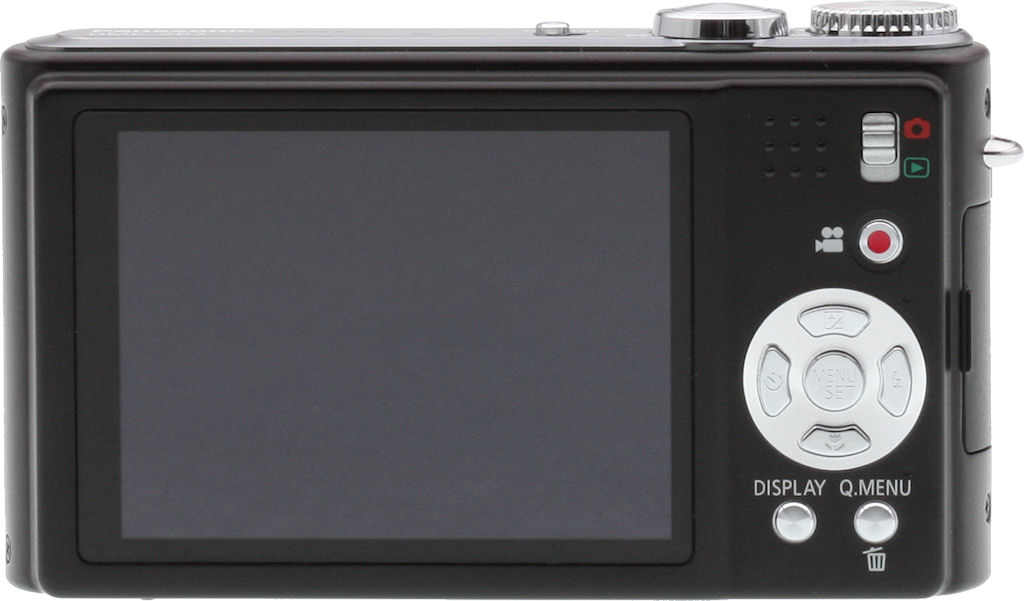
On the back of the camera, clustered to the right of the 2.7-inch LCD display is a switch for toggling between capture and playback modes, a dedicated Movie Record button, and a Four-way Controller that serves double-duty in record mode, providing access to exposure compensation, flash, macro focusing and self-timer options. In the center, a Menu / Set button confirms selections, and accesses the Panasonic ZR3's main menu system. Beneath the Four-way Controller are two smaller buttons, for changing display modes and entering the quick menu, which brings a series of camera functions to the top of the camera's display so you don't have to dig into the more expansive main menu system.
For the most part, the controls on the Panasonic ZR3 are well executed. The shutter button is fairly comfortably within reach shooting single-handed, but with the rear panel dominated by the LCD panel, controls here are quite close to the edge of the camera, and so require use of both hands. The dedicated Movie Record button is a nice touch, since it allows you to quickly start movie recording without switching modes, but it's quite small and flush with camera, so it's harder to turn on than it should be. Both the display and quick menu buttons are also on the small side, but they're raised off the body of the camera, and so not terribly difficult to activate even if -- like me -- you're cursed with sausage-link fingers.

Lens. One of the highlights of the Panasonic ZR3 is its Leica DC Vario-Elmar-branded 8x optical zoom lens, which folds away quite unobtrusively when this svelte Lumix is powered down. When you turn the Panasonic ZR3 on, the lens extends almost three quarters of an inch, and adds a further half inch when zoomed to the 200mm-equivalent telephoto position. At the other end of the range, it offers a 25mm-equivalent wide angle -- useful for fitting in more of your subject when shooting in tighter confines.
The Lumix ZR3 offers what Panasonic dubs Intelligent Zoom, which the company says boosts the zoom range by 1.25x to 10x -- or 250mm equivalent -- while still retaining sharpness and details. Intelligent Zoom is a form of digital zoom -- that is to say, it takes data from the sensor and interpolates the missing data required to save the image with larger overall dimensions. Thanks to some clever processing and it's relatively modest magnification level, though, images don't appear to suffer much for its use. The Panasonic ZR3 also offers a traditional 4x digital zoom function, which will take you out to 800mm equivalent (or 1,000mm equivalent when using Intelligent Zoom) -- but with an accompanying decrease in resolution and detail.
Panasonic also offers an Extra Optical Zoom function, which operates only at resolutions below the ZR3's native 14 megapixels, and simply crops the central portion from the image sensor. Since there's no interpolation involved, there's no loss in detail, and the function does allow you to frame, focus, and meter as if you had the extra optical zoom range available. In terms of subject detail, there's no advantage over simply cropping the image in post-processing, however, and once an image is saved with extra optical zoom in use, there's no way to restore the data that was cropped and discarded, if you later discover you've accidentally cut off part of your subject. Extra Optical Zoom boosts the effective telephoto to 238mm equivalent at 10 megapixels, 283mm at 7 megapixels, 338mm at five megapixels, or 423mm at resolutions of three megapixels or below. While Intelligent Zoom and digital zoom can be disabled, Extra Optical Zoom is always active when the Panasonic ZR3's resolution is set to anything below its native 14 megapixels.